




Telescopes
For impressive images of distant planetary systems and a detailed overview of the universe, a telescope offers a solution.
83
Search results
Sort by:
Popularity
Popularity
Price low - high
Price high - low
["12449436","12416622","12260417","122063053","12449434","12168756","12470654","12305667","12470662","122060894","12359122","12285501","12470661","12543514","12470660","12527840","12416612","12470656"]

NATIONAL GEOGRAPHIC Telescope and Microscope Set with Smartphone Adapter
In stock
67, 90 €
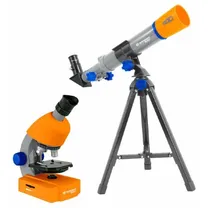
Bresser Microscope + Telescope Set Kids
In stock
64, 90 €
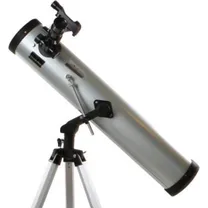
Byomic Beginners Mirror Telescope 76/700 in Case
In stock
List price 129 €
126 €
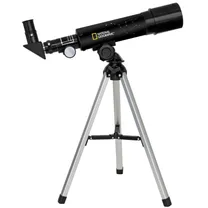
National Geographic Lens Telescope 50/360 18x-60x
In stock
List price 62,90 €
54 €
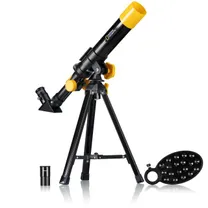
NATIONAL GEOGRAPHIC 40/400 table-top telescope
In stock
34, 90 €

Bynolyt Bynostar Poolzoeker
In stock
List price 50 €
15 €
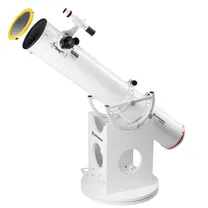
Bresser Messier 6'' planetary Dobson telescope with solar filter
Temporarily sold out
399 €

Bresser Taurus 90/900 NG Telescope
Temporarily sold out
299 €
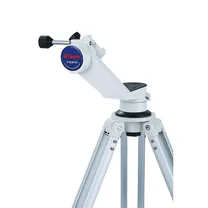
Vixen Porta II azimuthal mount
On order
325 €

National Geographic 114/900 AZ reflecting telescope
Temporarily sold out
159, 90 €

Byomic Dobson Telescope SkyDiver 102/640
On order
239 €

Bresser Venus 76/700 AZ Mirror Telescope
Temporarily sold out
125 €
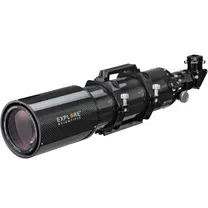
Explore Scientific ED APO 127mm triplet apochromat F/7.5 FCD-100 CF HEX
In stock
2768 €
 Temporary price reduction
Vaonis Hestia Ultimate Pack
In stock
349 €
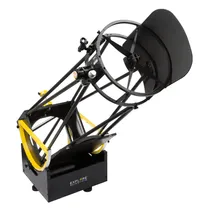
Explore Scientific 16 Inch Ultra Light Dobson 406mm
On order
2799 €

Kite Optics APC 60 ED (without eyepiece)
On order
1500 €

Bresser Messier EXOS-2 EQ GOTO Mount
On order
998 €

Explore Scientific EXOS-2 PMC-Eight GOTO mount
On order
939 €
Popularity
Price low - high
Price high - low
What is a telescope?
A telescope magnifies the image that we as humans can see through the use of a magnifying glass (eyepiece) in combination with a lens. The stars themselves are not so much bigger because of their distance, but the number of stars, the brightness and the structure becomes clearer with the use of a telescope. Due to the construction of a telescope, the diameter of the lens plays the main role when we talk about the sharpness of the image. With a larger diameter, the telescope captures more light and you can therefore observe fainter stars better. The first telescopes date back to 1608 and were designed in the Netherlands.
Types of telescope
There are several telescopes on the market, each of which uses different techniques to enlarge the image. We've outlined three types.
- Refractor: With a refractor, the light is refracted by the convex lens at the front of the telescope. By changing the direction of the light, the image we see can be magnified many times over. These telescopes therefore fall into a higher price category, but do make it possible to observe the structures of planets closer to the earth. The first binoculars that appeared on the market already made use of this technique and it is still a widely used type of telescope.
- Reflector: Instead of using a lens, the reflector uses a concave mirror at the bottom of the viewing tube. As the name implies, the light is reflected from this mirror, causing the light rays to converge at a single point. The eyepiece is mounted on the outside of the telescope tube, the extra mirror that directs light to this point therefore also blocks some light. Another name for the reflector comes from inventor Isaac Newton, the Newton telescope.
- Catadioptric: A third type combines the different systems of other types of telescopes. The catadioptric viewer therefore uses both convex lenses and concave mirrors. Many inaccuracies of other systems can be corrected by this combination. We see the high quality reflected in the cost.
Eyepieces
The eyepiece is close to the point we look through with the eye. This part of the telescope consists of several lenses that make the image perfectly parallel again. By turning the focus knob, the eyepiece can move in or out, allowing us to focus the image. By changing the eyepiece, the magnification factor of the image can be changed. Too large a magnification can cause blurry images, but with a set of eyepieces , you can test different effects.
Stabilise the image
For observing celestial objects it is important that the telescope can be placed in a stable manner, so that no vibrations arise in the image. Many telescopes are heavy and can be provided with more stability using a tripod. The tripod is already included with some telescopes, but not in other cases. It is therefore advisable to purchase a Tripod .
Maintenance
With a telescope, you can view beautiful images of the universe. It can be annoying when there is a blur or a lot of dust on the lens. It is therefore important to store parts such as eyepieces in a dust-free case. A lens cloth, air pump or lens pen can offer a solution to the various options for keeping the lens clean.