




Tripod head
A tripod head provides the necessary support and stability for a camera on a tripod, allowing beautiful and noise-free photos and movies to be taken.
226
Search results
Sort by:
Popularity
Popularity
Price low - high
Price high - low
["12359159","12186435","12347561","12371731","101636","12188633","12558279","12186417","12186413","12450685","12371760","12396201","12553027","12536499","12359162","12294516","12435782","12312218"]
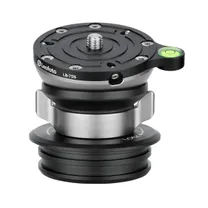
Leofoto LB-75S Leveling base for Summit series
On order
159 €
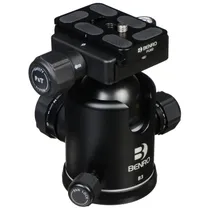
Benro B3 Ball Head with PU-60 Quick Release Plate
On order
179 €
 10-year warranty
Manfrotto Befree 3Way Live Head
On order
164, 99 €
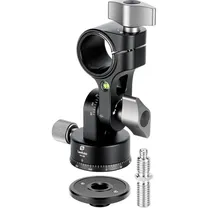
Leofoto HX-32 Center column tilt adapter for Urban LX-324CT
On order
129 €
 10-year warranty
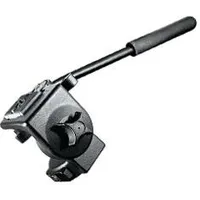
Manfrotto 128RC Micro Video Head
On order
149, 99 €

Gitzo GS5321V75 Bowl Adapter 75mm
On order
149 €
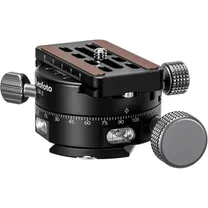
Leofoto Panning Clamp
On order
119, 99 €

Benro B1 Ball Head with PU-60 Quick Release Plate
On order
129 €
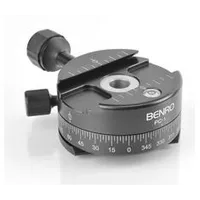
Benro PC1 Panorama Head
On order
129 €
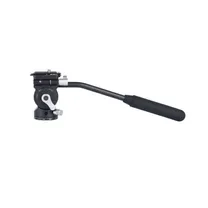
AOKA ST-3 Mini Video Tilt Head
On order
99 €
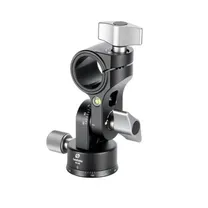
Leofoto HX-25 Centre column tilt adapter for tripod LX-254CT
On order
89 €
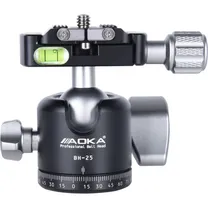
AOKA BH25 ball head
On order
85 €
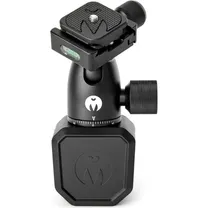
3 Legged Thing Window Mount Clamp Kit Airhead Mini Darkness Matte Black
On order
99, 99 €
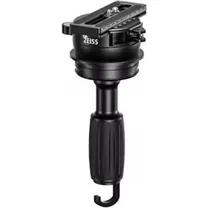
Carl Zeiss Leveling Head Q-75
On order
List price 305 €
252, 54 €

Leofoto Ballhead MBC-18
On order
73, 99 €
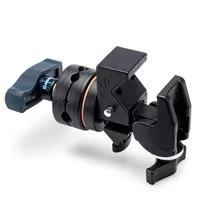
Manfrotto Avenger D230 super clamp grip head
On order
104, 99 €
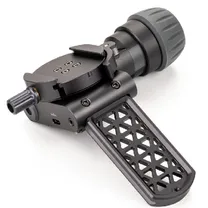
Benro Polaris Astro Module for the BR203 (BR205)
On order
List price 275 €
230, 07 €
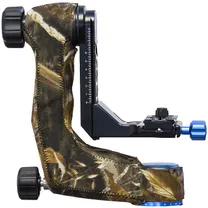
Lenscoat Benro GH5C Carbon Fiber Gimbal Head Cover Realtree Max5
On order
58, 99 €
Popularity
Price low - high
Price high - low
What is a tripod head?
A tripod head supports the camera and is attached to the end of a tripod. With the appropriate head, the accuracy and stability of your recordings will increase significantly. It is important to take into account the maximum load of a tripod, since the camera itself already takes up part of this weight. Due to the different tilting movements, both horizontal and vertical recordings can be made. The final position can also be determined by adding a spirit level.
Types of tripod heads
Tripod heads are available in different models, each with different functions and possibilities. We've outlined the difference between six tripod heads.
- Ball head: This fixing is common and comprises a ball in a socket, it is the ideal head for photographing from any position. Thanks to the rotary knob, the ball can be quickly moved to a different position, so that functionality and freedom of movement work well together. The contraption itself can be disconnected and connected with a single button.
- Tilt-Pan (2- or 3-way head) : The tilt-pan head is available in two versions, with 2 or 3 twist-lock rings. The advantage of 3 rings is that the frame of the image can be adjusted with great precision. The disadvantage is that this also takes more time. With two levers, the camera can be placed in a horizontal or vertical position, making it quick and functional for switching between two positions.
- Panorama head : When creating a panorama, you will quickly run into the problem of differences arising in contrast and sharpness between objects in the foreground and background when stitching the photos. With a panorama head, you can avoid this problem because you can set a point around which the camera will rotate. The overlaps between the photos blend in. This head is therefore suitable for panoramas in nature as well as in the city or indoors.
- Video head / Fluid head: Special video heads have been developed for recording film that can greatly improve the entire process. A video head is equipped with a control lever, which allows smooth movements during recording. This allows this camera to move precisely along a horizontal or vertical axis, perfect for tracking people or vehicles. This head is therefore very suitable for various purposes in the film industry.
- Gimbal: This tripod head has a bracket shape and is specially developed for cameras with long telephoto lenses. With its shape and mounting, the head can greatly improve the handling of a heavy camera. The gimbal must be mounted on a ball head and can therefore be placed in any possible position.
Attaching the head and camera to the tripod
Nowadays, attaching a tripod head to the accompanying tripod is a simple job. The head is screwed onto the tripod with the supplied screw connection. In some cases, a screw is also used to mount the camera onto the head, but a more convenient and faster method is to use a quick-release plate. You screw this to the bottom of the camera, which allows the camera to be connected to the tripod head in a quick movement. In all cases, it is important to check whether the tripod and the head can be combined with the plate and the screws.