




Tripod head
A tripod head provides the necessary support and stability for a camera on a tripod, allowing beautiful and noise-free photos and movies to be taken.
225
Search results
Sort by:
Popularity
Popularity
Price low - high
Price high - low
["12507086","12475720","12435781","12517120","12314577","1217706","12558281","12291918","12537745","12492000","1213906","12169344","12577959","12536500","1213709","101743","12577957","101700"]

Leofoto PG-3 Gimbal head
On order
699, 99 €
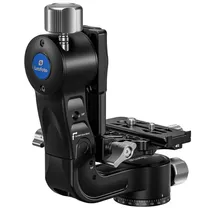
Leofoto PG-2 Foldable Gimbal head
On order
699 €
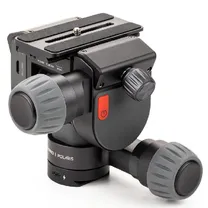
Benro Polaris Timelapse 2-Axis Head (BR203)
On order
1040 €
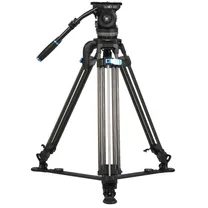
Sirui Twin-Leg Video Tripod 100mm Half-Bowl + VHS18 Professional Fluid Head
On order
List price 939 €
839 €
 10-year warranty
Manfrotto Nitrotech 608 Fluid Video Head
On order
674 €

Gitzo GH5750QR Magnesium Off-Centre Ball Head Series 5
On order
601 €

Leofoto PG-3SL Carbon Fiber Gimbal Head with long handle - green
On order
499, 99 €

Sirui PH-30 Gimbal head
On order
429 €
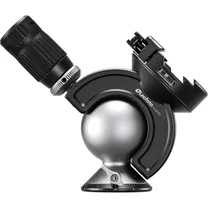
Leofoto MH-60LRC Panning Ball Head
On order
439, 99 €
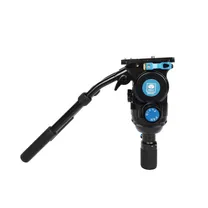
Sirui Video Fluid Head SVH15
On order
List price 819 €
689 €

Gitzo GH3750QR Off-Centre Ball Head Serie3
On order
463 €

Wimberley WH-200 Tripod Head Ver.II
On order
List price 799 €
699 €
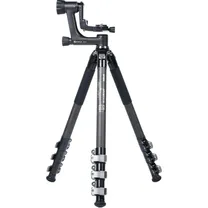
Sirui Sportich Carbon Tripod SP324+BH-10
On order
459 €

Carl Zeiss Ballhead V-60
On order
510 €

Gitzo GH2750QR Series 2 Off Centre Ballhead
On order
401 €
 10-year warranty
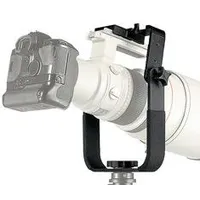
Manfrotto 393 Heavy Lens Support
On order
353 €
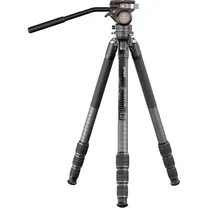
Sirui Sportich Carbon Tripod SP124+B5X
On order
349 €
 10-year warranty
Manfrotto 300N Panoramic Head
On order
319, 99 €
Popularity
Price low - high
Price high - low
What is a tripod head?
A tripod head supports the camera and is attached to the end of a tripod. With the appropriate head, the accuracy and stability of your recordings will increase significantly. It is important to take into account the maximum load of a tripod, since the camera itself already takes up part of this weight. Due to the different tilting movements, both horizontal and vertical recordings can be made. The final position can also be determined by adding a spirit level.
Types of tripod heads
Tripod heads are available in different models, each with different functions and possibilities. We've outlined the difference between six tripod heads.
- Ball head: This fixing is common and comprises a ball in a socket, it is the ideal head for photographing from any position. Thanks to the rotary knob, the ball can be quickly moved to a different position, so that functionality and freedom of movement work well together. The contraption itself can be disconnected and connected with a single button.
- Tilt-Pan (2- or 3-way head) : The tilt-pan head is available in two versions, with 2 or 3 twist-lock rings. The advantage of 3 rings is that the frame of the image can be adjusted with great precision. The disadvantage is that this also takes more time. With two levers, the camera can be placed in a horizontal or vertical position, making it quick and functional for switching between two positions.
- Panorama head : When creating a panorama, you will quickly run into the problem of differences arising in contrast and sharpness between objects in the foreground and background when stitching the photos. With a panorama head, you can avoid this problem because you can set a point around which the camera will rotate. The overlaps between the photos blend in. This head is therefore suitable for panoramas in nature as well as in the city or indoors.
- Video head / Fluid head: Special video heads have been developed for recording film that can greatly improve the entire process. A video head is equipped with a control lever, which allows smooth movements during recording. This allows this camera to move precisely along a horizontal or vertical axis, perfect for tracking people or vehicles. This head is therefore very suitable for various purposes in the film industry.
- Gimbal: This tripod head has a bracket shape and is specially developed for cameras with long telephoto lenses. With its shape and mounting, the head can greatly improve the handling of a heavy camera. The gimbal must be mounted on a ball head and can therefore be placed in any possible position.
Attaching the head and camera to the tripod
Nowadays, attaching a tripod head to the accompanying tripod is a simple job. The head is screwed onto the tripod with the supplied screw connection. In some cases, a screw is also used to mount the camera onto the head, but a more convenient and faster method is to use a quick-release plate. You screw this to the bottom of the camera, which allows the camera to be connected to the tripod head in a quick movement. In all cases, it is important to check whether the tripod and the head can be combined with the plate and the screws.