




Cine Lens
Video lenses help you take extremely varied recordings. Take for example, flashy reports, stunning nature fragments or fast-paced action scenes. More about
353
Search results
Sort by:
Popularity
Popularity
Price low - high
Price high - low
["12554477","12554475","12407641","12344963","12344959","12344945","12179725","12224165","12204072","12204063","12335150","12358604","12358603","12207002","12206997","12206996","12208329","1220748555"]
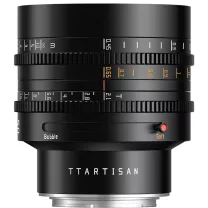
TTArtisan 50mm T2.1 - Canon RF
On order
429 €
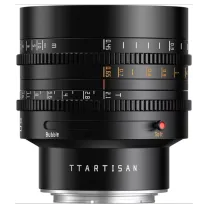
TTArtisan 50mm T2.1 – Sony FE
On order
429 €
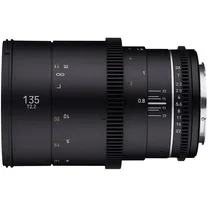
Samyang 135mm T2.2 VDSLR MK2 Nikon
On order
639, 99 €
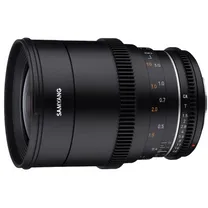
Samyang VDSLR 35mm T1.5 MK2 Nikon F
On order
609, 99 €
Samyang VDSLR 35mm T1.5 MK2 MFT
On order
609, 99 €
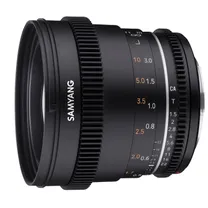
Samyang VDSLR 50mm T1.5 MK2 Canon EF
On order
609, 99 €
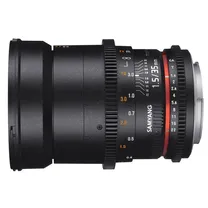
Samyang 35mm T/1.5 ED AS UMC Canon VDSLR
On order
599, 99 €
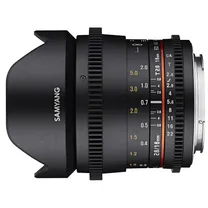
Samyang 16mm T2.6 VDSLR ED AS UMC Canon
On order
599, 99 €
Samyang 135mm T2.2 VDSLR Sony E-Mount
On order
599, 99 €
Samyang 135mm T2.2 VDSLR Canon
On order
599, 99 €
 5 years warranty
Irix Cine Lens 45mm T1.5 for Canon
On order
List price 1195 €
1099 €
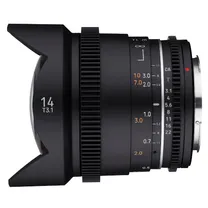
Samyang 14mm T3.1 VDSLR MK2 Nikon
On order
549, 99 €
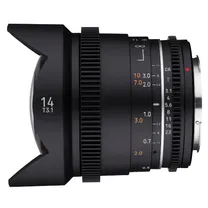
Samyang 14mm T3.1 VDSLR MK2 MFT
On order
549, 99 €
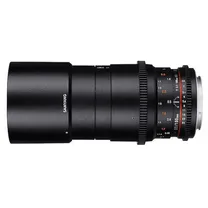
Samyang 100mm T3.1 VDSLR Macro Sony E-Mount
On order
549, 99 €
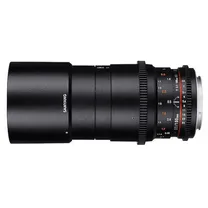
Samyang 100mm T3.1 VDSLR Macro MFT
On order
549, 99 €

Samyang 100mm T3.1 VDSLR Macro Canon M
On order
549, 99 €
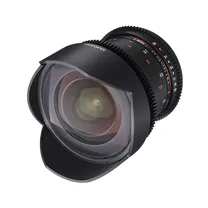
Samyang 14mm T3.1 ED AS IF UMC Sony-E II VDSLR
On order
479, 99 €
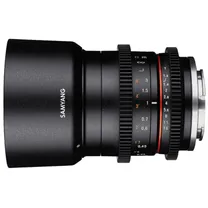
Samyang 35mm T1.3 ED AS UMC Cine Fuji X
On order
459, 99 €
Popularity
Price low - high
Price high - low
Everything you need to know about video lenses
Video lenses are ideal for moving images. These are also called film recordings.
What is a video lens?
As the name suggests, a video lens is especially designed for video cameras. A video lens is also known as a cine lens, cinema lens or objective lens. These lenses have been designed to meet the particular requirements of moving images. Take for example, design, focus control, zoom control and light & aperture control. Below we have outlined the key features to help you find the right one for you.
Different lenses
All lens types are covered in the range of video lenses available. Prime, zoom, telephoto lenses. These lenses work in the same as camera lenses. As such, the prime lens still has a fixed focal distance, and with a telephoto lens you can zoom in from a great distance away. The one you choose depends on the creative path you're on. If you're making reports then you'll no doubt quickly reach for a zoom or telephoto lens. Prime lenses are more suitable for taking stabler footage.
Focus = key
With focus you lead the scope through your narrative. You have to be able to switch from one subject to another, but also be able to track your subject without the image blurring. That's why accurate focus control comprises one of the key features to look out for when buying a video lens. You must be able to retain proper focus, even when zooming in or out. The lenses that match this brief are also known as parfocal lenses. You can control your focus using the focus ring on the lens. These are infinitely adjustable, for optimum precision. You will see this expressed as an ft value.
Light and aperture control
Cinema lenses are not aperture-controlled. Instead, these lenses use iris rings with T stop settings. T stop stands for transmission. T stop values indicate the amount of light that is actually transmitting through your lens to your camera. With F stops there is a formula that calculates how much light needs to transmit through the lens, based on the focal distance, divided by the exit pupil. Please note: T stops don't take any loss of light into account caused by the various glass elements. So, the safer option are F stops, yet T stops give you enhanced accuracy.
Design
Video lenses differentiate themselves from camera lenses with their optical design and quality. You'll see this for yourself soon enough, when working in tricky lighting conditions. In part, this is down to the significant investment in reducing image distortion in the lens. You see, vignetting for example, is far sooner discernible in moving images than in photos. This relates to reflection and refraction. This in turn makes lens coating, among other things, vitally important. Usually, this results in a decrease in lens contamination.
What brand to choose?
Do you have a particular brand in mind? We have various top brands: